

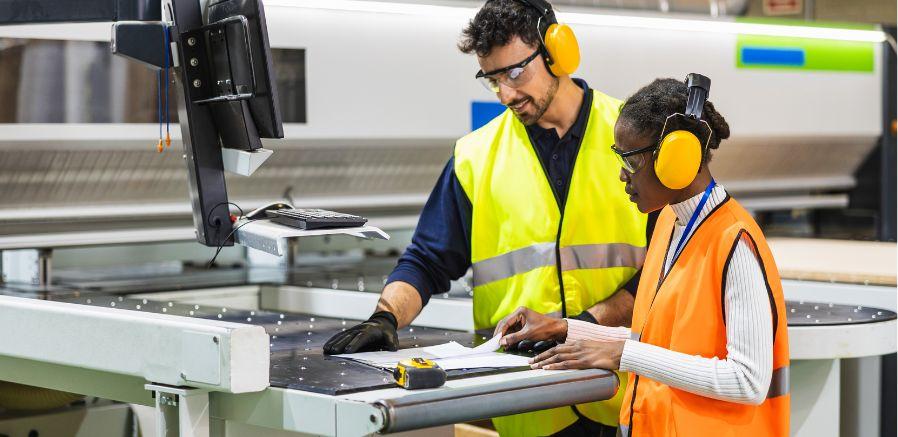
Importance of CNC Machining in the Manufacturing Industry
CNC machining has become one of the most critical technologies in modern manufacturing, enabling companies to produce high-precision components with exceptional accuracy, efficiency, and consistency. CNC machining, or Computer Numerical Control machining, uses automated computer programs to control machine tools such as mills, lathes, and routers. This technology has transformed traditional manufacturing processes by reducing human error, improving productivity, and enabling complex component production across industries such as aerospace, automotive, electronics, and industrial equipment.
Today, CNC machining services are essential for manufacturers seeking reliable, scalable, and cost-effective production solutions in a highly competitive global market.
What is CNC Machining?
CNC machining is a manufacturing process where pre-programmed computer software controls the movement of factory tools and machinery. These machines can perform various operations, including cutting, drilling, milling, turning, and grinding, to create precision components from materials such as metal, plastic, and composites.
Unlike manual machining, CNC machining ensures consistent accuracy and repeatability, making it ideal for both prototype development and high-volume production.
Key Benefits of CNC Machining in Manufacturing
1. High Precision and Accuracy
One of the most important advantages of CNC machining is its ability to produce components with extremely tight tolerances. Precision is essential in industries such as aerospace, automotive, and medical equipment, where even minor deviations can affect performance and safety.
CNC machining ensures that each part is manufactured exactly according to design specifications, improving product reliability and quality.
2. Improved Production Efficiency
CNC machines operate automatically based on programmed instructions, allowing continuous production with minimal human intervention. This significantly improves production speed and reduces downtime.
Manufacturers can produce large volumes of components quickly and efficiently, making CNC machining ideal for mass production.
3. Consistent Quality and Repeatability
Consistency is crucial in manufacturing, especially for OEMs and industrial suppliers. CNC machining ensures that every component produced is identical to the original design.
This repeatability is essential for industries that require uniform components for assembly and performance reliability.
4. Capability to Produce Complex Components
Modern products often require complex geometries and intricate designs that are difficult to achieve with manual machining. CNC machining enables manufacturers to create highly complex parts with precision.
This capability is particularly valuable in sectors such as:
- Aerospace engineering
- Automotive manufacturing
- Medical device production
- Electronics manufacturing
5. Reduced Human Error
Since CNC machining processes are automated and controlled by computer programs, the risk of human error is significantly reduced. This improves product quality and minimizes material waste.
Automation also enhances workplace safety by reducing the need for manual machine operation
6. Cost-Effective Manufacturing Solution
Although CNC machines require initial investment, they offer long-term cost savings through improved efficiency, reduced labor costs, and minimized material waste.
Manufacturers benefit from faster production cycles and lower operational costs, making CNC machining a cost-effective solution.
Applications of CNC Machining in Various Industries
CNC machining plays a vital role across multiple industries due to its versatility and precision.
Aerospace Industry
The aerospace sector requires highly precise components such as turbine blades, engine parts, and structural components. CNC machining ensures strict adherence to safety and performance standards.
Automotive Industry
Automotive manufacturers rely on CNC machining to produce engine components, transmission parts, and structural elements with high accuracy and durability.
Electronics Industry
CNC machining is used to manufacture electronic enclosures, connectors, heat sinks, and precision components used in electronic devices.
Medical Industry
Medical equipment and surgical tools require exceptional precision. CNC machining ensures compliance with strict medical standards.
Industrial Machinery
Industrial equipment manufacturers use CNC machining to produce gears, shafts, housings, and machine components that ensure reliable operation.
Role of CNC Machining in Modern Precision Manufacturing
Precision manufacturing depends heavily on CNC machining technology to meet increasing demands for accuracy, efficiency, and scalability. Companies offering advanced CNC machining services help manufacturers improve production quality and reduce operational costs.
For example, SAXEO Manufacturing provides advanced CNC machining and precision engineering solutions for industries such as automotive, aerospace, and industrial equipment. Their expertise in precision component manufacturing ensures reliable production, consistent quality, and efficient project execution.
Manufacturers working with experienced CNC machining providers benefit from improved product performance and faster time-to-market.
CNC Machining and Industry 4.0
CNC machining is a key component of Industry 4.0, which focuses on automation, digital manufacturing, and smart factory integration.
Modern CNC machines integrate with:
- CAD/CAM software
- Automated quality control systems
- Robotics and automation
- Real-time production monitoring
These technologies enhance manufacturing efficiency, reduce downtime, and improve overall productivity.
CNC Machining vs Traditional Machining
CNC machining offers several advantages compared to traditional manual machining:
|
Feature |
CNC Machining |
Traditional Machining |
|
Accuracy |
Very high precision |
Limited precision |
|
Efficiency |
Automated and fast |
Slower production |
|
Consistency |
Highly consistent |
Less consistent |
|
Complexity |
Handles complex designs |
Limited capability |
|
Labor Requirement |
Minimal manual work |
High manual effort |
This comparison highlights why CNC machining has become the preferred manufacturing method.
Why Manufacturers Choose CNC Machining Services
Manufacturers choose CNC machining services for several important reasons:
- High precision component production
- Faster manufacturing processes
- Consistent product quality
- Reduced production errors
- Cost-effective manufacturing
- Ability to produce complex designs
These benefits make CNC machining essential for modern industrial production
Future of CNC Machining in Manufacturing
The future of CNC machining is driven by advancements in automation, artificial intelligence, and digital manufacturing technologies. Smart CNC machines will continue to improve efficiency, accuracy, and production flexibility.
As industries demand higher precision and faster production, CNC machining will remain a fundamental technology in global manufacturing.
Conclusion
CNC machining plays a critical role in the manufacturing industry by enabling precise, efficient, and reliable component production. Its ability to produce complex parts with high accuracy makes it essential for industries such as aerospace, automotive, electronics, and industrial machinery.
As manufacturing continues to evolve, CNC machining will remain a key driver of innovation, productivity, and industrial growth. Companies that leverage advanced CNC machining solutions can improve product quality, reduce costs, and maintain a competitive advantage in the global market.
FAQ Section
What is CNC machining used for?
CNC machining is used to manufacture precision components for industries such as aerospace, automotive, electronics, and industrial machinery.
Why is CNC machining important in manufacturing?
CNC machining ensures high precision, efficiency, consistency, and cost-effective production of industrial components.
Which industries use CNC machining the most?
Industries such as aerospace, automotive, medical, electronics, and heavy machinery rely heavily on CNC machining.
Is CNC machining better than manual machining?
Yes, CNC machining offers greater accuracy, faster production, and better consistency compared to manual machining.
Recent Posts
Wed May 13 2026
Top Laser Cutting Services Companies in Colorado
Mon May 11 2026
Top Sheet Metal Fabrication Companies in Colorado
Fri May 08 2026
Top Milling Machine Companies in Colorado
Thu May 07 2026
Top CNC Machining Companies in Colorado
Wed May 06 2026
Top Plastic Fabrication Companies in Colorado