

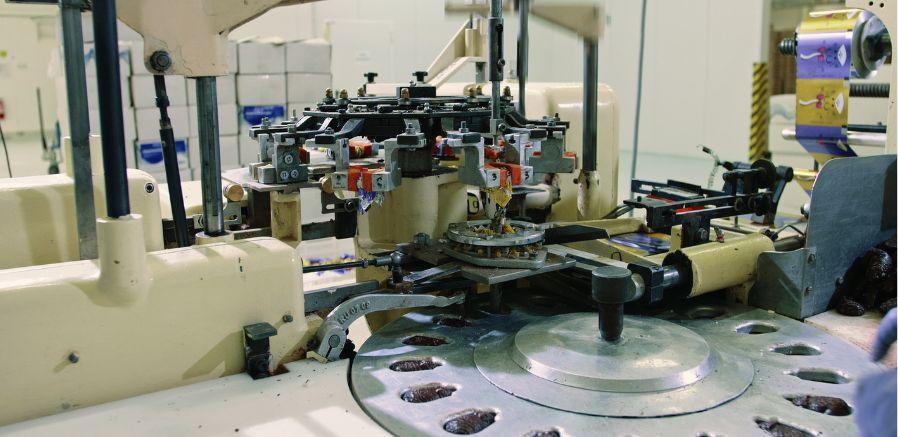
Is Manufacturing Shifting from China to India?
For decades, China has been known as the world’s manufacturing powerhouse. However, in recent years, global manufacturers have started exploring alternative production locations. One country that is attracting significant attention is India. But is manufacturing really shifting from China to India? The answer lies in changing supply chains, rising costs, and new global sourcing strategies.
Global Manufacturing Landscape Is Changing
The global manufacturing ecosystem is undergoing a transformation. Rising labor costs in China, geopolitical tensions, and disruptions caused by the COVID-19 pandemic exposed vulnerabilities in single-country sourcing models. As a result, many companies are adopting a China+1 strategy, where production is diversified across multiple countries.
India is emerging as a strong candidate due to its expanding industrial base, large workforce, and supportive government policies.
Why Companies Are Moving Manufacturing Out of China
Several factors are driving manufacturers to reduce their dependence on China:
- Increasing labor and operational costs
- Trade restrictions and tariffs
- Supply chain disruptions
- Over-concentration of production
- Rising regulatory pressures
To minimize risk, global brands are spreading production across South Asia and Southeast Asia. India, in particular, has become a preferred destination for electronics manufacturing, automotive components, and industrial equipment.
Why India Is Gaining Manufacturing Momentum
India offers multiple advantages as a manufacturing destination:
1. Large Skilled Workforce
India has a growing pool of engineers, technicians, and factory workers. Its education system produces millions of graduates each year, supporting sectors such as electronics, machinery, and industrial manufacturing.
2. Government Manufacturing Initiatives
Programs like Make in India and Production Linked Incentives (PLI) encourage domestic and foreign companies to manufacture locally. These policies aim to strengthen India’s position in the global supply chain.
3. Expanding Industrial Infrastructure
India is investing in:
- Industrial corridors
- Manufacturing clusters
- Logistics and port development
- Special economic zones
These improvements make it easier for companies to set up factories and export finished goods.
Industries Leading the Shift to India
Manufacturing is not moving all at once, but certain industries are clearly shifting production toward India:
- Electronics and smartphone manufacturing
- Automotive and auto components
- Industrial machinery
- Medical devices
- Renewable energy equipment
- Electrical and electronic components
Electronics manufacturing services (EMS) companies are especially expanding operations in India as demand for consumer electronics continues to rise.
Role of Supply Chain Diversification
Rather than fully replacing China, most companies are diversifying their supply chains. China still remains a dominant manufacturing hub, especially for high-volume and highly automated production. However, India is becoming an important secondary base for manufacturing and sourcing.
This shift supports:
- Risk mitigation
- Faster regional distribution
- Cost optimization
- Better resilience against global disruptions
Challenges India Still Faces
Despite strong growth, India faces challenges before it can fully compete with China:
- Limited semiconductor manufacturing
- Dependency on imported raw materials
- Infrastructure gaps in certain regions
- Lower factory automation levels
- Longer setup timelines
Overcoming these barriers is essential for India to capture a larger share of global manufacturing.
How B2B Platforms Support the Shift
As manufacturing expands in India, businesses need efficient ways to find reliable suppliers and manufacturers. Digital B2B sourcing platforms play a crucial role by connecting buyers with verified manufacturers across different industries.
findingmfg.com helps bridge this gap by enabling businesses to:
- Discover manufacturers and suppliers
- Compare production capabilities
- Source components and finished goods
- Expand supplier networks beyond China
This supports global companies seeking alternative manufacturing partners in India and other emerging markets.
Future Outlook: China and India Will Co-Exist
Manufacturing is not leaving China entirely. Instead, the global production model is evolving into a multi-country ecosystem. China will continue to dominate in advanced manufacturing and high-volume production, while India will expand rapidly in labor-intensive and mid-tech manufacturing sectors.
Over the next decade, India is expected to increase its share of global manufacturing, particularly in:
- Electronics
- Industrial equipment
- Automotive components
- Green energy technologies
Conclusion
So, is manufacturing shifting from China to India? The shift is already underway — not as a complete replacement, but as part of a global diversification strategy. India is becoming a key manufacturing destination due to cost advantages, policy support, and industrial growth.
With continuous infrastructure development and stronger supply chains, India is well-positioned to play a larger role in global manufacturing. Platforms like findingmfg.com make this transition easier by connecting businesses with trusted manufacturing partners worldwide.
In summary, manufacturing is not abandoning China — but India is clearly becoming a powerful second hub in the global production network.
Recent Posts
Thu Apr 02 2026
Top 3D Printing Companies in California
Wed Apr 01 2026
Top Injection Molding Companies in California
Fri Mar 27 2026
Top Design Engineering Companies in Maharashtra
Thu Mar 26 2026
Top Injection Molding Companies in Pune 2026
Thu Mar 26 2026
Top PCB Manufacturing Companies in Pune