

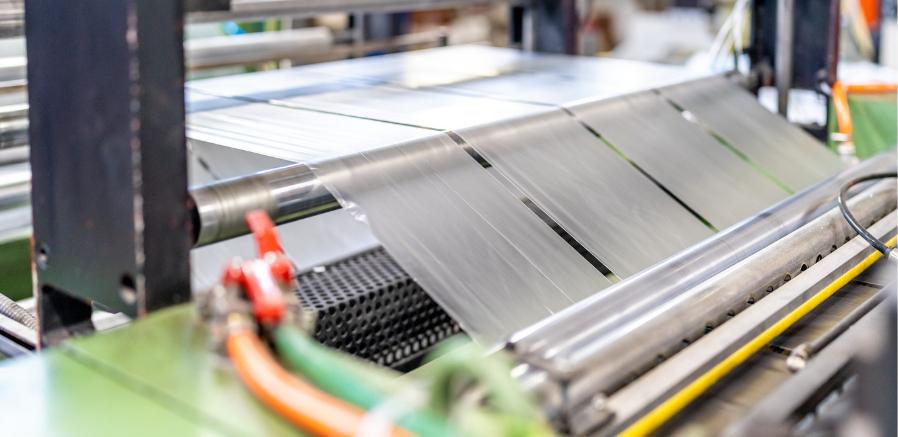
Top Plastic Manufacturing Companies in Connecticut
Connecticut has a long-established manufacturing base serving medical devices, aerospace, defense, electronics, industrial equipment, consumer products, and specialty manufacturing. Within this ecosystem, plastic manufacturing companies in Connecticut provide capabilities ranging from injection molding and plastic fabrication to tooling, machining, extrusion, thermoforming, and custom-engineered plastic components.
For OEMs, product developers, engineers, and procurement teams, choosing the right plastics manufacturer requires more than simply finding a company that can mold or fabricate plastic. Material selection, tooling, tolerances, production volume, secondary operations, inspection, and engineering support can all affect the final product.
Top 10 Plastic Manufacturing Companies in Connecticut
1. Carpin Manufacturing, Inc.
Carpin Manufacturing Inc. is based in Waterbury, Connecticut, and has a long manufacturing history involving plastic injection molding and metal stamping. The company produces floor-protection products and specialty components for applications ranging from furniture and material-handling equipment to medical products.
Carpin combines injection molding with in-house engineering, CAD/CAM design, tooling, rapid prototyping, 3D printing, and assembly. This integrated approach can be useful for customers looking for a supplier capable of supporting a product from development through production.
Key capabilities include:
- Plastic injection molding
- Custom engineered plastic components
- CAD/CAM design and tooling
- Rapid prototyping
- 3D printing
- Precision assembly
- Metal stamping
2. Raym-Co, Inc.
Raym-Co Inc operates in Farmington, Connecticut, and provides precision manufacturing services with significant experience in plastic fabrication.
The company states that it has more than 40 years of plastic fabrication experience and combines machining, finishing, bonding, assembly, engineering, and inspection capabilities. Its ability to work with close-tolerance components makes it relevant to projects where plastic parts require precision machining or additional processing.
Areas to consider include:
- Plastic fabrication
- Close-tolerance machining
- Multi-axis machining
- Turning and milling
- Bonding
- Vapor and flame polishing
- Assembly and finishing
3. Hawk Integrated Plastics
Hawk Integrated Plastics LLC is located in Columbia, Connecticut, and specializes in injection molding and integrated plastic manufacturing solutions.
Hawk's capabilities include product design and development, material selection, tool and part design, stress analysis, tight-tolerance molding, and injection molding. Its equipment includes injection molding machines ranging from 72 to 460 tons. The company also works with engineering thermoplastics such as PEEK, PEI, PPS, PPSU, POM, PET, PPA, nylon, ABS, polycarbonate, and polyethylene.
Its quality system is certified to ISO 9001:2015 and AS9100D:2016, making its capabilities particularly relevant to demanding aerospace, defense, and industrial applications.
Key capabilities include:
- Injection molding
- Tight-tolerance molding
- Tool and part design
- Insert molding
- Engineering thermoplastics
- CNC machining
- Automated inspection
- Scientific testing
4. Polylok Inc.
Polylok, Inc. is located in Wallingford, Connecticut, and is listed as a manufacturer and plastic injection molding company.
Injection molding can be an efficient manufacturing method for producing repeatable plastic components at scale. For businesses considering a supplier, important factors include available press capacity, tooling support, material expertise, dimensional requirements, production volumes, and secondary operations.
Areas to evaluate include:
- Plastic injection molding
- Custom molded components
- Production molding
- Plastic manufacturing
- Tooling requirements
- Component inspection
- Production support
5. Precision Plastic Fabrication
Precision Plastic Fabrication is based in Brookfield, Connecticut, and focuses on plastic fabrication.
Plastic fabrication differs from injection molding because components can be manufactured by processes such as cutting, bending, forming, machining, bonding, and assembly. These techniques can be advantageous for prototypes, custom parts, enclosures, panels, and lower-volume applications.
Potential applications include:
- Custom plastic fabrication
- Plastic components
- Machined plastics
- Fabricated assemblies
- Prototyping
- Custom enclosures
- Industrial plastic parts
6. Ivanhoe Tool & Die Co Inc
Ivanhoe Tool & Die Co Inc is included in the provided list of Connecticut plastic manufacturing companies. Its tool-and-die background is particularly relevant to plastic manufacturing because molds and tooling directly influence the quality, consistency, and economics of injection-molded components.
For manufacturers developing a molded product, tooling design should be considered early in the process. Factors such as part geometry, draft angles, material shrinkage, cooling, cavity configuration, and expected production volume can influence mold design and cost.
Areas to consider include:
- Tool and die manufacturing
- Mold-related manufacturing
- Production tooling
- Plastic component development
- Precision manufacturing
- Custom tooling
7. American Molded Products Inc
American Molded Products Inc is located in Bridgeport, Connecticut, and is listed as a plastic fabrication company.
Molded plastic products can be used across industrial, commercial, consumer, and specialized applications. Manufacturers evaluating a molding supplier should consider the required resin, part dimensions, tolerances, tooling requirements, production quantity, and finishing specifications.
Key areas to evaluate include:
- Molded plastic products
- Plastic fabrication
- Custom components
- Production molding
- Plastic processing
- Manufacturing support
8. New Star Mold
New Star Mold operates in Shelton, Connecticut, and is included in the supplied list of companies serving the mold and plastics manufacturing sector.
Mold manufacturing is an important part of the injection molding supply chain. Properly engineered molds help maintain repeatability and can influence cycle time, part quality, maintenance requirements, and overall tooling life.
For OEMs, it is useful to determine whether a supplier supports mold design, mold construction, modifications, maintenance, and production integration.
Areas to consider include:
- Mold manufacturing
- Plastic manufacturing support
- Tooling
- Mold development
- Production tooling
- Custom manufacturing
9. Impact Plastics
Impact Plastics operates in Putnam, Connecticut, and specializes in custom plastic sheet extrusion and thermoforming-related solutions.
The company's capabilities include custom-developed sheet and rollstock materials, with applications covering medical packaging, pharmaceutical packaging, electronics packaging, consumer products, construction, automotive, transportation, and food packaging. Its material portfolio includes polypropylene, polystyrene, polyethylene, ABS, TPO, and other engineered formulations.
Impact Plastics also highlights real-time gauge monitoring for material thickness and customized extrusion solutions, making it relevant to manufacturers requiring controlled sheet and rollstock specifications.
Key capabilities include:
- Plastic sheet extrusion
- Custom rollstock
- Thermoforming
- Engineered plastic materials
- Multi-layer structures
- Medical packaging
- Industrial applications
10. Burteck LLC
Burteck LLC is based in Bloomfield, Connecticut, and is listed as a plastic injection molding service.
Injection molding is widely used for producing repeatable thermoplastic components where consistent dimensions and production efficiency are important. Companies evaluating Burteck or similar suppliers should review current molding equipment, supported resins, tooling capabilities, production capacity, inspection procedures, and secondary operations.
Areas to evaluate include:
- Injection molding
- Thermoplastic components
- Custom molded parts
- Production molding
- Tooling
- Plastic manufacturing
- Quality inspection
What Is Plastic Manufacturing?
Plastic manufacturing covers a broad range of processes used to convert polymer materials into finished components, products, sheets, packaging, and engineered parts.
Common processes include:
- Injection molding
- Plastic extrusion
- Thermoforming
- CNC plastic machining
- Plastic fabrication
- Blow molding
- Compression molding
- Rotational molding
- Vacuum forming
- Plastic assembly
The best process depends on the component's geometry, material, production volume, tolerance, appearance, and intended application.
Injection Molding in Connecticut
Injection molding is one of the most widely used processes for producing plastic components. During the process, polymer material is melted and injected into a mold under controlled pressure. After cooling, the finished component is removed from the mold.
The process is well suited to repeat production because a properly designed mold can produce large quantities of consistent components.
Connecticut's injection molding ecosystem includes companies with capabilities ranging from standard thermoplastics to engineering-grade materials and tight-tolerance applications.
Plastic Extrusion and Thermoforming
Extrusion is particularly useful for producing continuous plastic products such as sheets, films, profiles, tubes, and rollstock.
Thermoforming uses heat to shape plastic sheet over a mold. It is frequently used for packaging, trays, housings, industrial components, and other products.
Impact Plastics is an example from the provided list with a strong focus on custom sheet extrusion and thermoforming solutions.
Engineering Plastics and Material Selection
Selecting the correct polymer is an important part of product development.
Different applications may require:
- High-temperature resistance
- Chemical resistance
- Impact strength
- Dimensional stability
- Low friction
- Electrical insulation
- Lightweight construction
- UV resistance
- FDA or medical suitability
Engineering plastics such as PEEK, PEI, PPS, PPSU, POM, PPA, and other high-performance materials can be appropriate for demanding applications. Hawk Integrated Plastics, for example, identifies several of these materials within its molding capabilities.
Industries Served by Connecticut Plastic Manufacturers
Medical Devices
Plastic components are widely used in medical equipment, devices, packaging, trays, housings, and specialized components.
Aerospace and Defense
Aerospace applications can require lightweight, durable, dimensionally stable plastic components manufactured to controlled specifications.
Electronics
Plastic materials are commonly used for enclosures, insulating components, packaging, connectors, and protective structures.
Automotive and Transportation
Plastic components can reduce weight while providing design flexibility and resistance to environmental conditions.
Industrial Equipment
Industrial products use molded, machined, fabricated, and extruded plastics for housings, guards, components, seals, and functional assemblies.
Consumer Products
Plastic manufacturing enables high-volume production of consumer products with repeatable dimensions and complex geometries.
How to Choose a Plastic Manufacturing Company in Connecticut?
Selecting a plastic manufacturing company in Connecticut should start with the requirements of the part rather than the manufacturing process alone.
1. Define the Material
Identify the required resin or polymer and its mechanical, thermal, chemical, and regulatory requirements.
2. Determine the Manufacturing Process
Injection molding may be appropriate for high-volume molded components, while machining or fabrication can be more practical for prototypes and low-volume custom parts.
3. Evaluate Tooling
For molded components, tooling represents an important portion of the initial investment. Discuss mold design, cavity count, expected tool life, maintenance, and future modifications.
4. Consider Production Volume
The right supplier for a prototype may not be the right supplier for hundreds of thousands of parts. Confirm that production capacity matches both current and future demand.
5. Review Tolerances
Critical dimensions should be identified on engineering drawings. Tight tolerances may require specialized molding, machining, inspection, or process controls.
6. Assess Secondary Operations
Parts may require machining, trimming, bonding, welding, printing, coating, assembly, or other finishing operations after molding or fabrication.
7. Examine Quality Systems
For aerospace, defense, medical, and other regulated applications, review applicable certifications, inspection processes, traceability, documentation, and quality controls.
Why Connecticut Is Important for Plastic Manufacturing
Connecticut's manufacturing economy has strong connections to advanced engineering, aerospace, medical technology, defense, electronics, and industrial production.
This creates demand for plastic components that go beyond basic commodity products. Manufacturers may require precision molding, engineering plastics, custom extrusion, thermoforming, plastic machining, specialized tooling, and complex assemblies.
The state's established industrial infrastructure also provides access to engineering expertise and specialized manufacturing suppliers.
Conclusion
The top plastic manufacturing companies in Connecticut listed here represent a diverse range of capabilities, including injection molding, plastic fabrication, tooling, precision machining, extrusion, thermoforming, and custom plastic component production.
For OEMs, engineers, procurement teams, and product developers, the best supplier should be selected according to material expertise, manufacturing process, tooling capability, production volume, tolerances, engineering support, quality requirements, secondary operations, lead time, and total project cost.
A strong RFQ should include the CAD model or engineering drawing, material specification, expected annual volume, tolerances, surface requirements, tooling expectations, inspection requirements, and delivery schedule. Providing this information allows Connecticut plastics manufacturers to assess the project accurately and recommend the most suitable production approach.
Recent Posts
Wed Oct 07 2026
Top Rubber Manufacturing Companies in Connecticut
Thu Oct 01 2026
Top Electronics Manufacturing Companies in Connecticut
Wed Sep 30 2026
Top Metal Stamping Companies in Arizona
Tue Sep 29 2026
Top Laser Cutting Services Companies in Arizona
Mon Sep 28 2026
Top Sheet Metal Fabrication Companies in Arizona